The starting point
Schwarz Transporte runs its own charging park for electric trucks, with battery storage and a solar (PV) system. Until now, the charging points were controlled by hand through the building automation.
- Electricity prices change every hour, cheap time slots went unused
- Solar power was fed into the grid instead of charging the trucks
- The grid connection is limited to 120 kW, several trucks at once are tricky
- Every truck needs a certain charge level before it leaves
Our approach
Before we developed anything, we mapped the charging park with all its technical limits in detail.
Site survey
Charging points, storage, PV, grid connection and building automation recorded with all key figures.
Requirements specification
Goals and rules defined: charging guarantee first, then the grid limit, then as cheap as possible.
Development
Optimisation, dashboard and web app for drivers, connected to the building automation on site.
Test run
In autumn 2026 the system is in test operation, and the dashboard is being refined continuously.
The daily plan at a glance
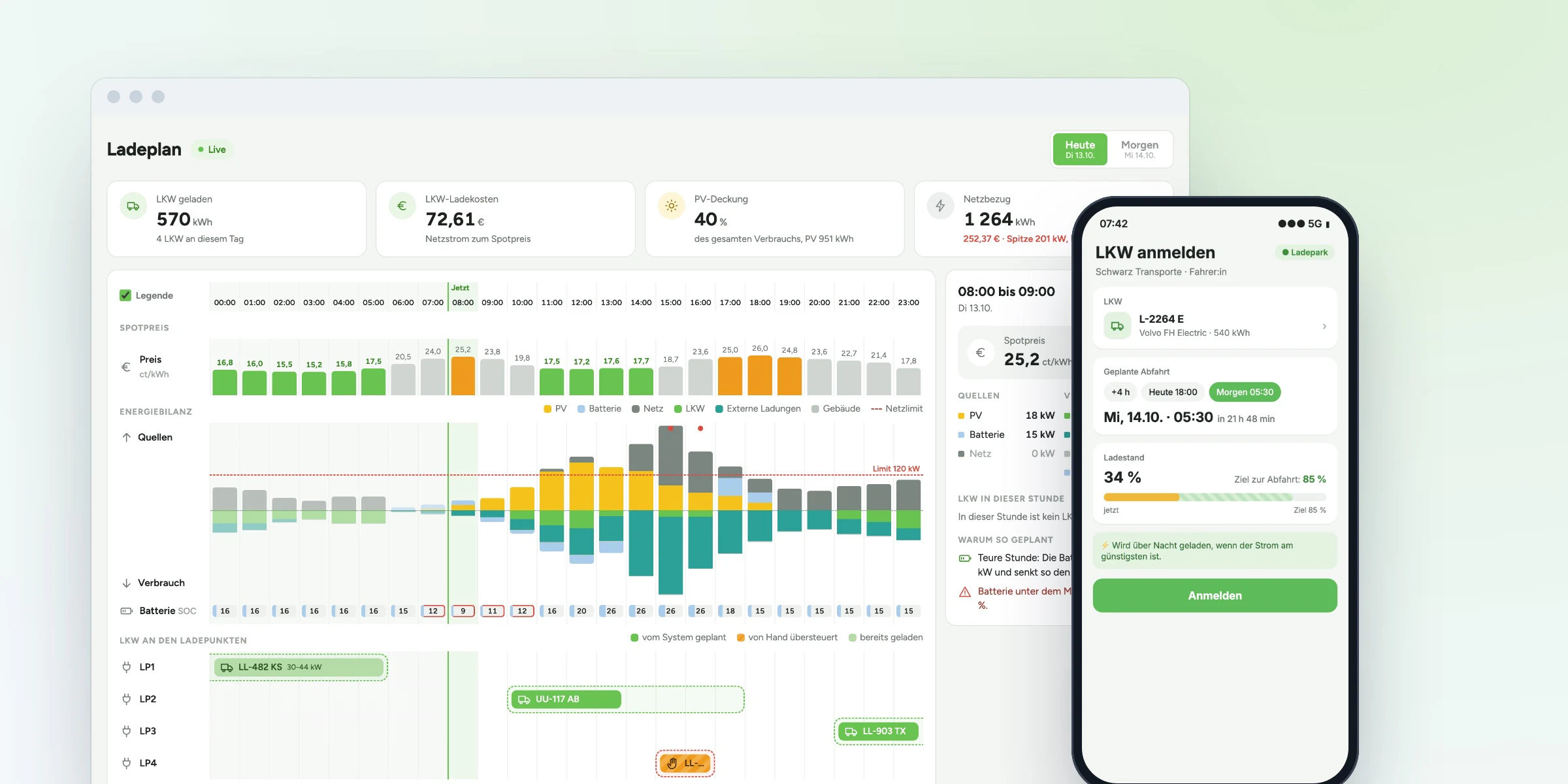
For every hour, the dashboard shows what the system decided and why. Hover over the hours and bars.
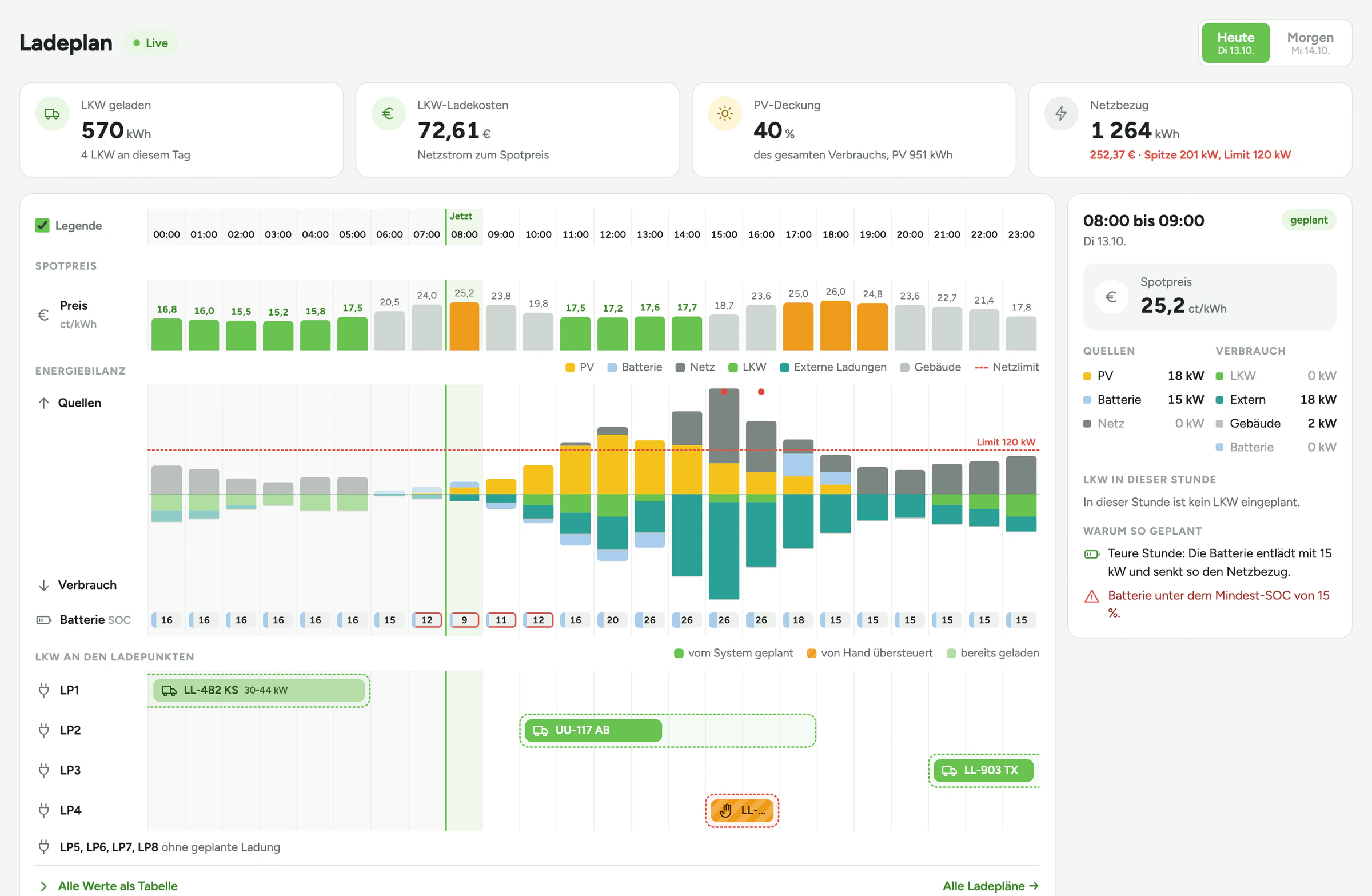
Interactive draft with sample data, in German.
How the system plans
Charging guarantee
Every checked-in truck reaches the required charge level by departure. This always comes first.
Using cheap hours
Charging happens preferably when the spot price is low. Tomorrow's prices arrive every day at noon.
Solar power first
PV power goes into the trucks and the storage before it is fed into the grid.
Connected to Loxone
The system reads the live values from the building automation and sends the target values every hour. A switch returns to manual control at any time.
Grid and storage protected
Grid draw and feed-in stay below 120 kW, the storage between 15 and 95%.
Manual override
Charging points can be set to a fixed value at any time. This resets automatically every day.
Check in the truck, done
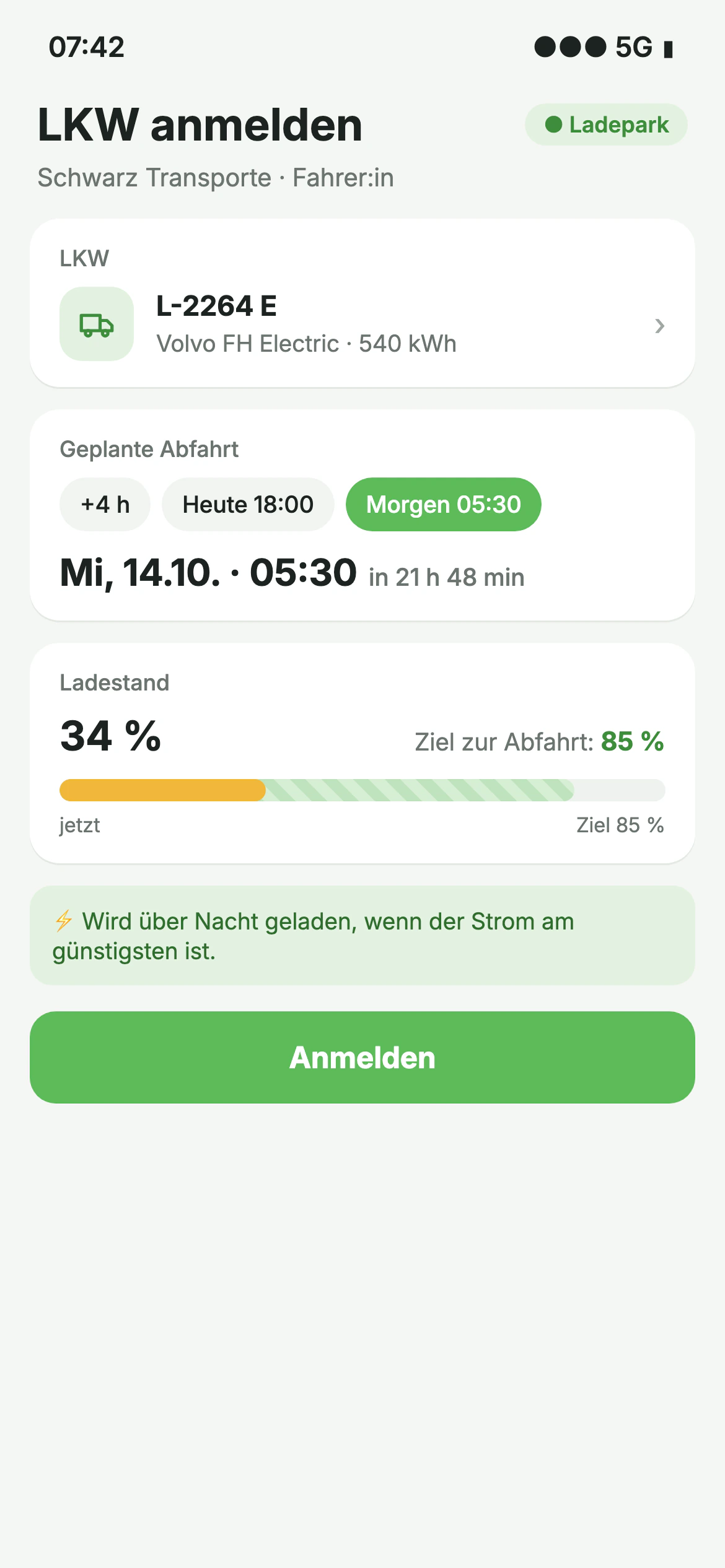
Drivers check in their truck with a simple web app in the browser, no app store download needed: which truck, when departure is planned, how full the battery is right now and what charge level it needs for departure. The system does the rest.
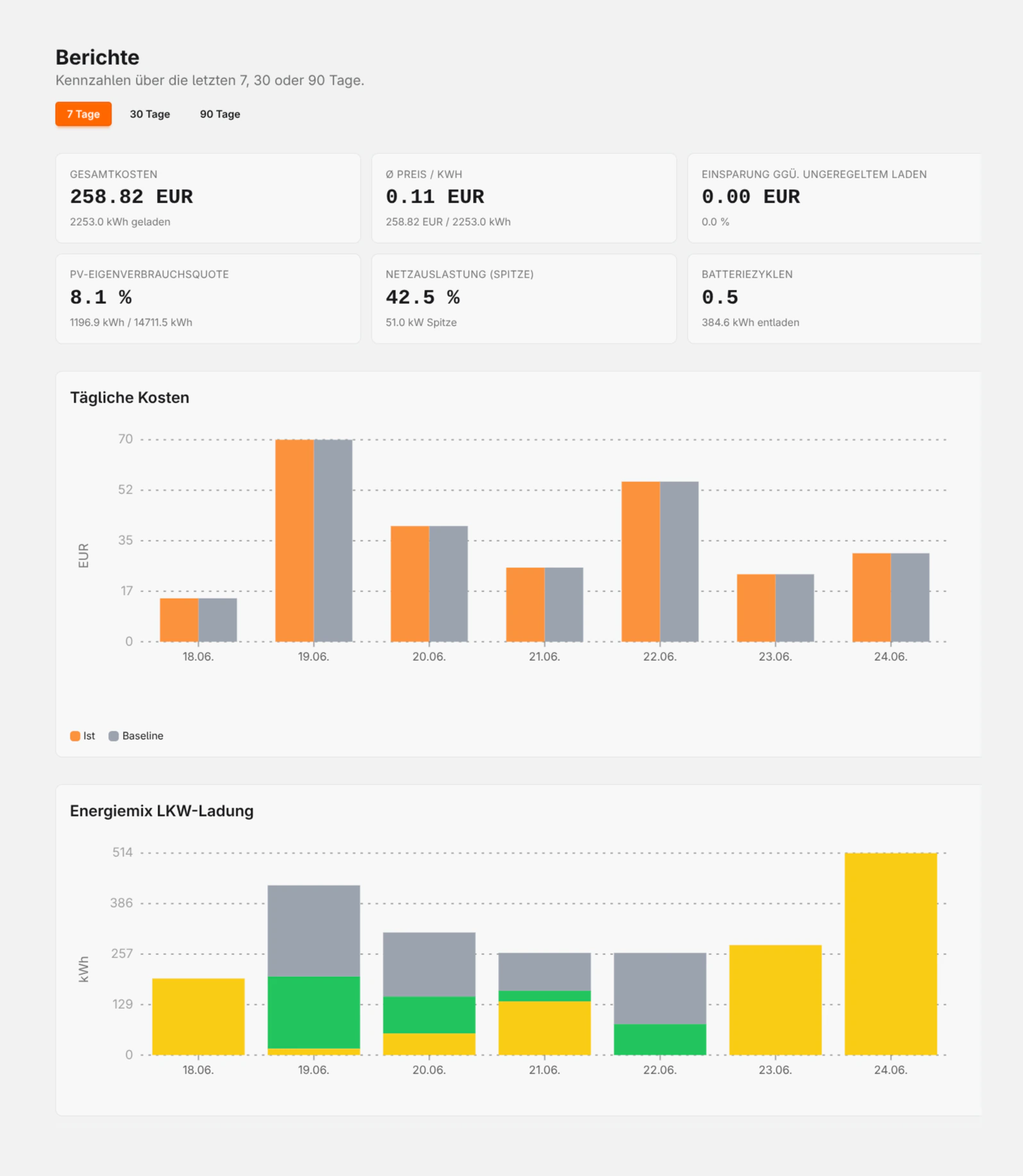
In the office, reports show what charging cost, how much solar power was used and how this develops over weeks.
You might also be interested in
HF Elektrik
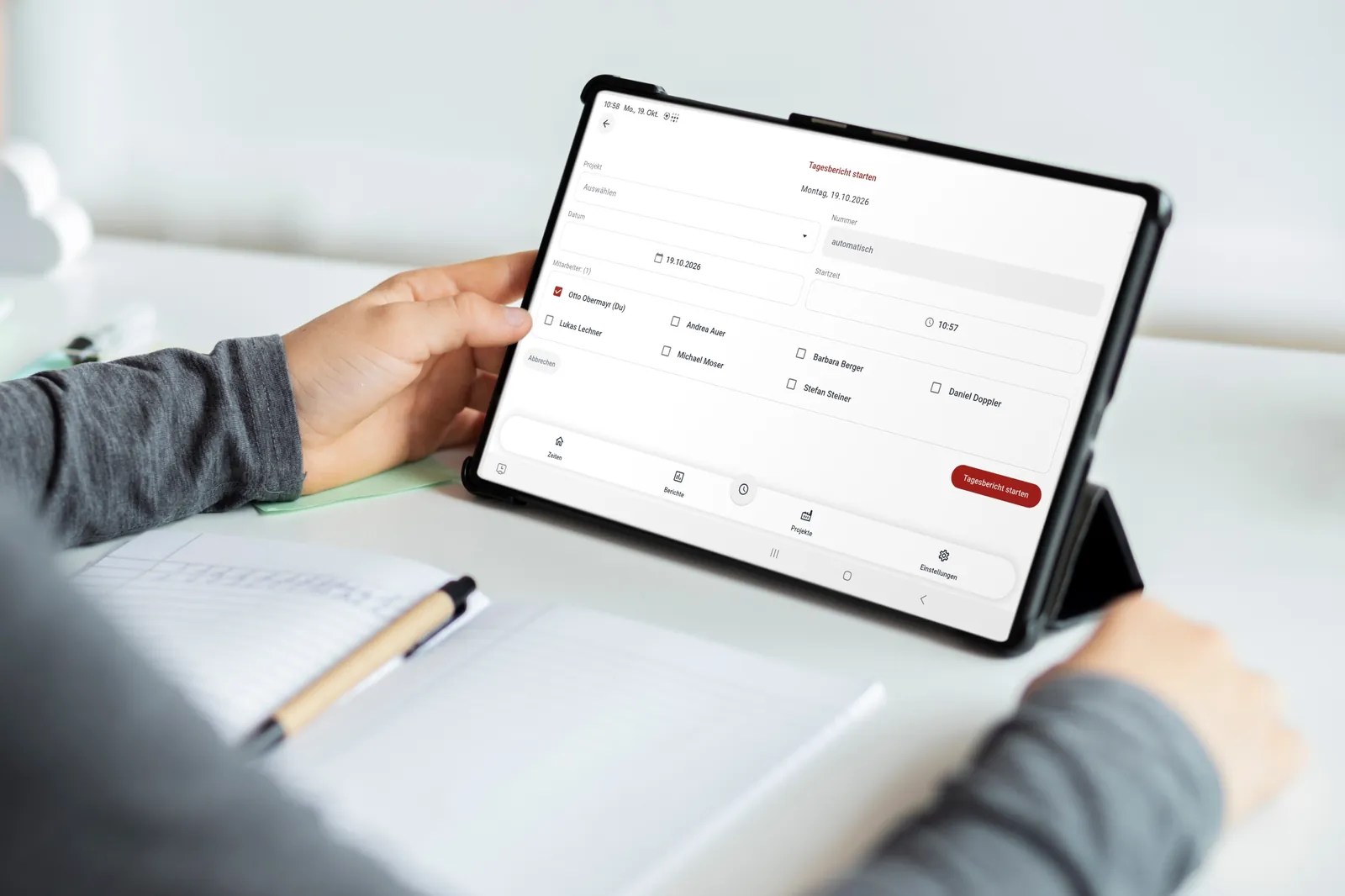
Work reports on paper, times recorded twice, invoices copied by hand for days. Today the field technicians fill in their daily report on the tablet, even offline, and the times flow into time tracking automatically, including surcharges.
View project →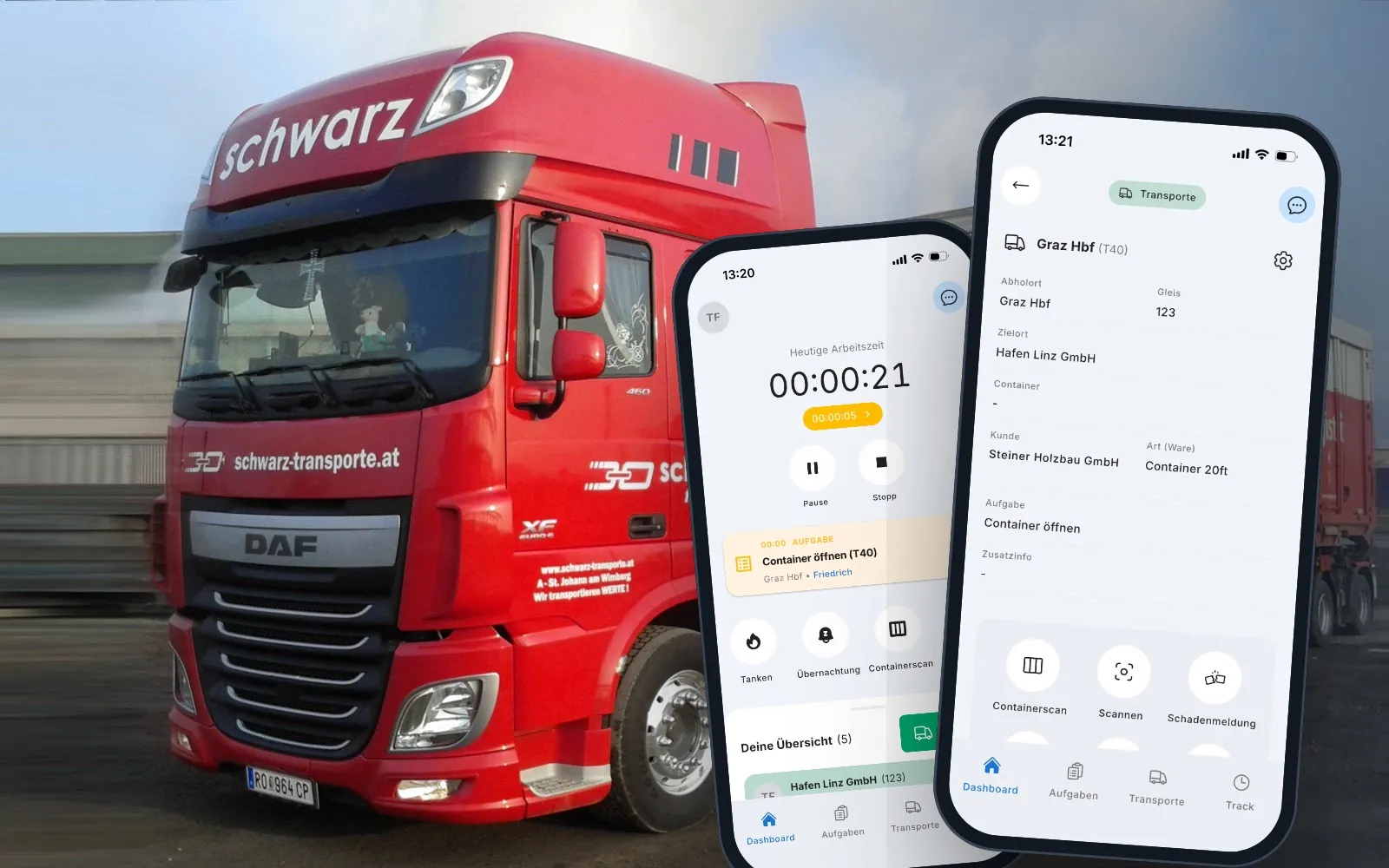
CargoCommander
Orders through various channels, paper and Excel, credit notes matched by hand. CargoCommander connects the ÖBB Rail Cargo Group, dispatch and drivers on one platform.
View project →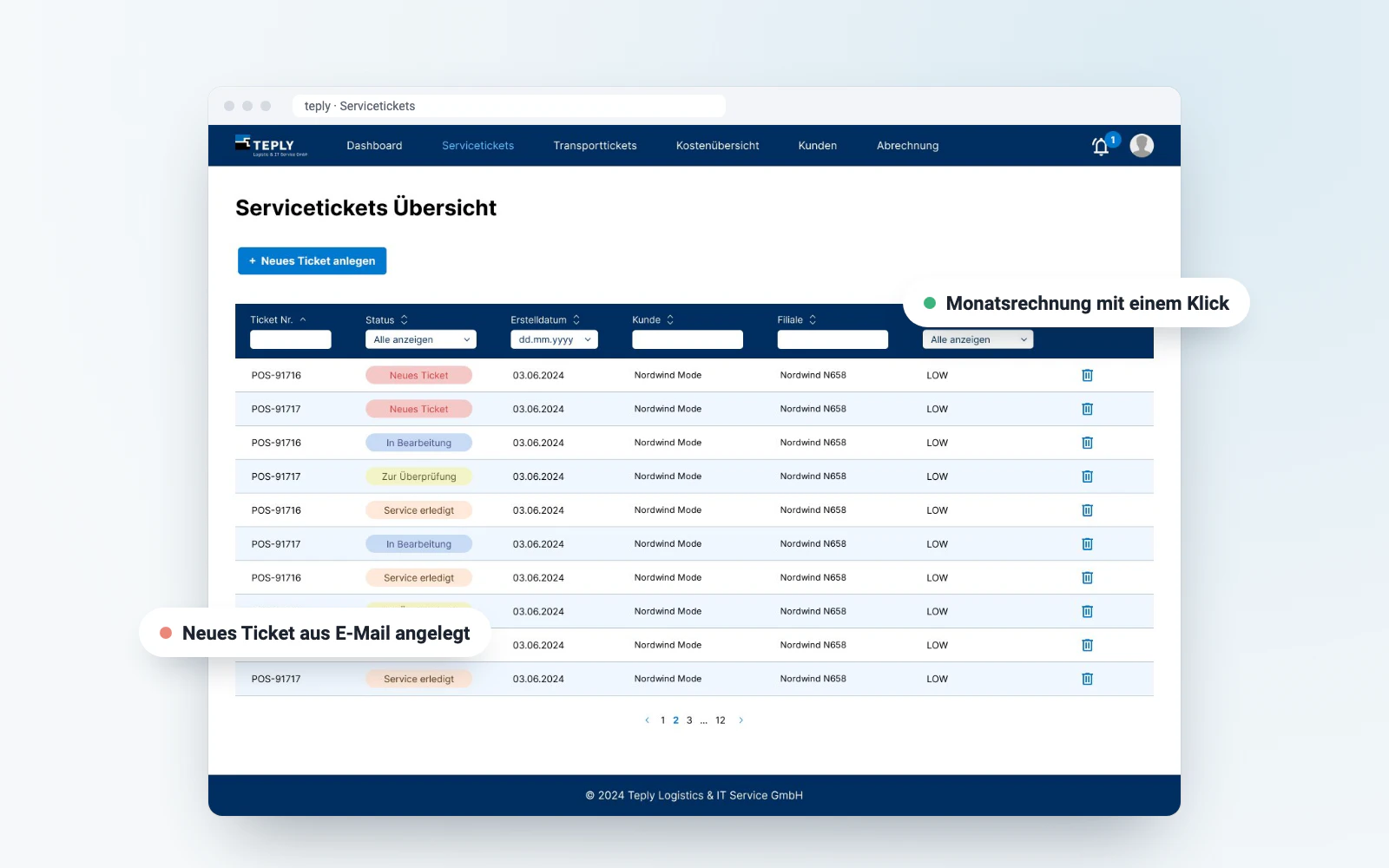
Teply ticket system
For Teply, a specialist in installations and service call-outs, we built a ticket system that handles customer requests, repair jobs and the coordination of technicians digitally, right through to simple invoicing.
View project →Any questions?
We are happy to tell you more about the project and what parts of it could work for you too.